Funeral Services
Sadaqah Jariyah Funeral Services provides Muslim funeral support for families across Dewsbury, Kirklees and surrounding areas. This page brings together the charity’s practical funeral support, Islamic guidance and service information into one clear place.
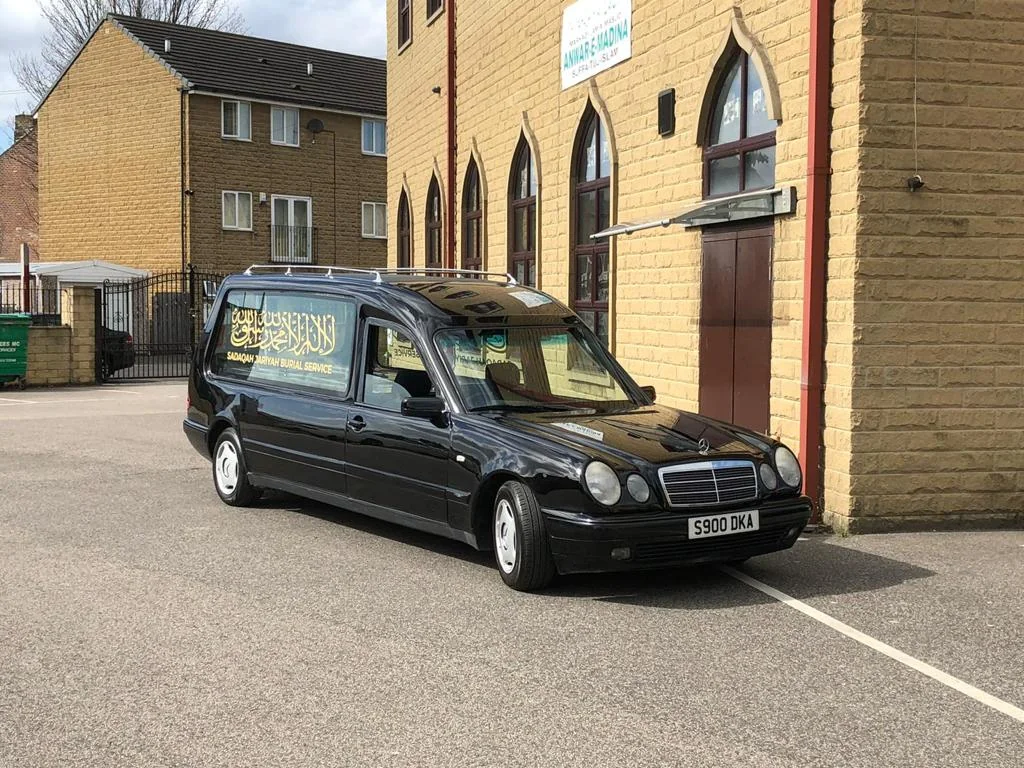
Practical support at one of the hardest moments.
Sadaqah Jariyah aims to reduce pressure on families by helping with the practical funeral steps, transport, Islamic guidance and burial-related arrangements.
What the service can cover
Collection of the deceased
Collection from home, hospital, hospice or another suitable location, depending on the circumstances and availability.
Transport support
Transport support for funeral arrangements, including movement between locations where required and appropriate.
Ghusl and shrouding
Support arranging ghusl, washing and shrouding of the deceased under suitable supervision.
Janazah guidance
Guidance around Salaatul Janaazah at a mosque or cemetery by prior arrangement.
Burial support
Practical guidance around burial, cemetery steps and related arrangements.
Repatriation support
Worldwide repatriation guidance and support where a family needs to transport the deceased abroad or bring a loved one back to the UK.
Support beyond logistics
Funeral support is not only about transport and paperwork. Families often need reassurance, calm communication and help understanding what happens next. The intention is to provide a personal service with emotional and practical support while families are grieving.
Areas covered
The charity serves Muslim communities across Kirklees, Calderdale, Bradford, Wakefield, Leeds and surrounding areas.
Donation-supported and non-profit
The service is provided through a registered charity and is supported by volunteers and donations. Donations help cover funeral support, transport, facilities, equipment, grave site support and operational costs.
When Someone Dies
If someone has died and you need to arrange a funeral, Sadaqah Jariyah Funerals will guide you through every step. From the first phone call to the day of the funeral and even afterwards, the team can support you with what needs to happen next.
What is the first thing to do when someone dies?
There are different steps to follow depending on where the person has died. Whether they died at home, in hospital, in a care home, or abroad, we can guide you through each step.
When someone dies at home
- Call the person’s doctor or NHS 111. A medical professional needs to verify the death. If the person’s doctor is not available, an on-call doctor or senior nurse may do this. A doctor will then be able to issue a medical certificate of cause of death, which is needed to register the death.
- Call Sadaqah Jariyah Funerals. Once the death has been verified, call us. We can bring the person who has died into our care at the time required, day or night, subject to availability.
- Register the death. You need to register the death within 5 days in England and Wales and within 8 days in Scotland. You can contact the registrar’s office local to the person who has died. Funeral arrangements can begin before the death is registered.
- Start arranging the funeral. We will listen, guide you through the required decisions and help with practical next steps.
Unexpected deaths at home
If someone dies unexpectedly at home, the emergency services must be involved. They will contact the coroner to investigate the cause of death. The coroner may arrange for a local funeral director to collect the person who has died and take them to a hospital mortuary or suitable location. You do not have to use that funeral director for the funeral arrangements.
If the death has been reported to the coroner, you can still contact Sadaqah Jariyah Funerals to begin arrangements, even if the person who has died is currently in the care of another funeral director.
When someone dies in hospital
- Call Sadaqah Jariyah Funerals. Once you have the medical certificate of cause of death, call us. The hospital may ask which funeral director you are using and may ask you to sign a form to confirm this.
- Register the death. You need to register the death within 5 days in England and Wales and within 8 days in Scotland. Some hospitals may require registration before the deceased can be released into our care.
- Start arranging the funeral. We will guide you through the practical steps, paperwork and funeral decisions.
Unexpected deaths in hospital
The hospital may need to carry out a post-mortem examination to confirm the cause of death. If they cannot determine the cause, the matter may be referred to the coroner or procurator fiscal. Once the required certificate and permissions are in place, we can help bring the person who has died into our care and begin funeral arrangements.
When someone dies abroad
- Tell the relevant authorities. If you are in the UK, contact the Foreign, Commonwealth & Development Office. If you are abroad, contact the local British Embassy or Consulate.
- Register the death. The death must usually be registered in the country where the person has died. The British Consul can help with this. If the person is being brought back to the UK, registration may also be needed near where the funeral will take place.
- Bringing the person back to the UK. Repatriation usually requires a death certificate, written permission to remove the body from the country of death and, in many cases, a certificate of embalming.
- When the person is back in the UK. The coroner may need to be informed and the death may need to be registered before the funeral can take place.
- Start arranging the funeral. Our worldwide repatriation support can help guide families through the process. Call us on 07714 837167.